


McLane vs. Little Wonder Edgers: 2026 Comparison
At first glance, the price gap between these two brands suggests a difference in build quality. However, a technical audit reveals that both McLane and Little Wonder utilize identical engines across their tiers (the Honda GX120 and Briggs & Stratton XR 550) and employ high-grade steel frames. The primary differentiator in 2026 isn't the powerplant. It is the trade-offs between Little Wonder's heavy-duty, dual-belt 10-inch platform with a cast iron cutter head, and McLane's single-belt architecture, which offers versatile trimming but imposes specific operational limits on 10-inch blades.
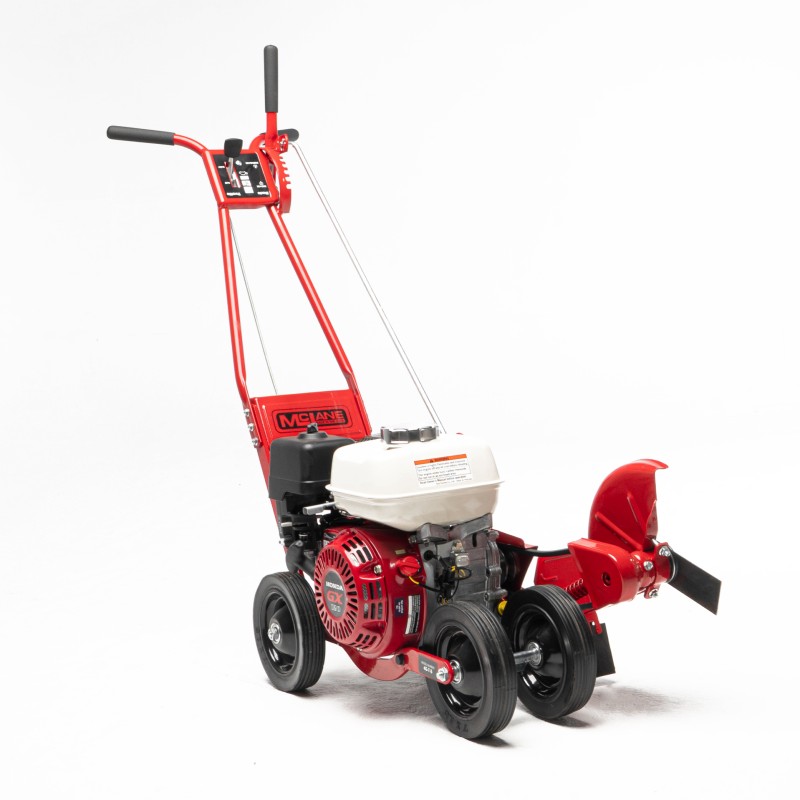
The McLane 4G-7-S
Features the 1957 Dual-Wheel Stability Design.
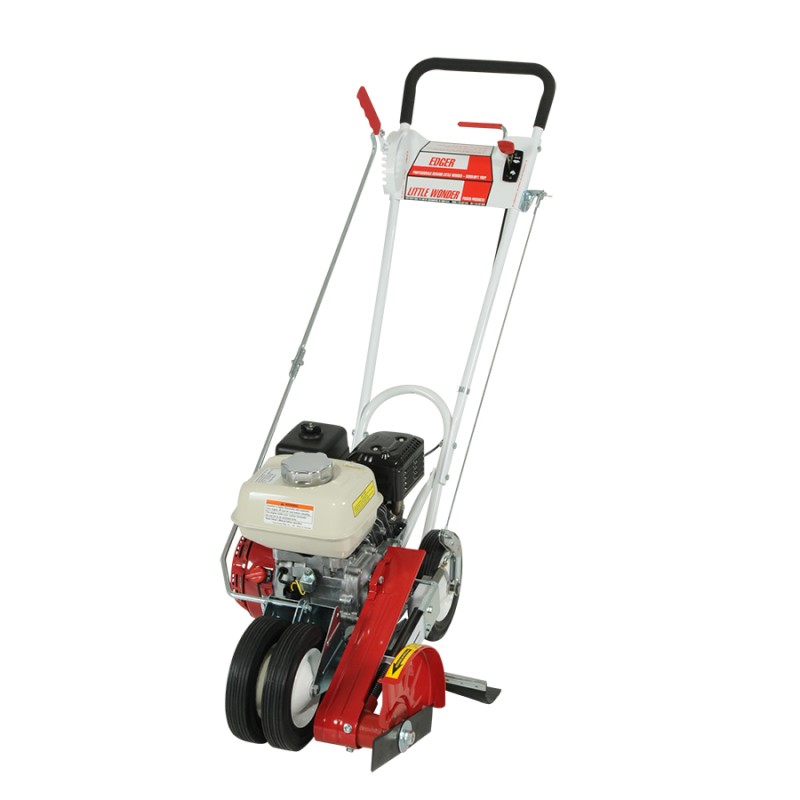
The Little Wonder 6232-00-01
Optimized for a dedicated 10-inch blade depth and dual-belt power.
Brand History and Legacy
Both brands share deep historical roots spanning back decades, originating as niche engineering operations before establishing their own distinct paths in the landscaping equipment industry.
Little Wonder
Little Wonder stands as one of the oldest and most reputable brands in the landscaping sector. According to their corporate history, "Detco Manufacturing owner, John C. Dettra from Oaks, PA, invented the Little Wonder in the early 1920's and sold the Little Wonder products starting in 1922"1. Initially recognized for a hand-crank trimmer, Little Wonder consistently engineered robust, commercial-focused products, bringing a heavy-duty design ethos to its modern walk-behind edgers.
McLane
Established in 1946 as the McLane Tool and Die Company, McLane brought industrial tool-and-die precision to the residential lawn market. The defining historical development of their edger platform (the theory of dual-front-wheel stability) was officially introduced in a patent filed in 1957 and granted on October 20, 1959. The inventor identified the fundamental tracking flaw of competitor models, stating, "a single supporting wheel on the front end of the machine... becomes very difficult to push forward because the single front wheel digs into the lawn"2. This 1957 dual-wheel architecture proved so successful that it remains the foundational blueprint for their walk-behind edgers today.
2026 Technical Specifications & Pricing
A review of the March 2026 retail data highlights the structural and pricing differences between the two lineups:
| Manufacturer | Model | Engine | Max Edging Depth | Standard Blade Length | March 2026 Retail |
|---|---|---|---|---|---|
| McLane | 100-5.50GT-7 | Briggs & Stratton XR 550 (3.5hp) | 3 inches** | 9 inches** | $750.00 |
| McLane | 4G-7-S | Honda GX120 | 3 inches** | 9 inches** | $1,050.00 |
| Little Wonder | 6033-00-01 | Briggs & Stratton XR 550 (3.5hp) | 4 inches | 10 inches | $1,299.00 |
| Little Wonder | 6232-00-01 | Honda GX120 | 4 inches | 10 inches | $1,499.00 |
** 9 inches with 3 inch depth for standard trench and trim mode, and 10 inches with 4 inch depth in edger-only mode
The Core Difference: Commercial Duty vs. Multi-Use Versatility
When comparing the Honda GX120 models head-to-head (the McLane 4G-7-S at $1,050 vs. the Little Wonder 6232-00-01 at $1,499), the engines are an exact match. One defining difference is how the power is delivered to the ground. Little Wonder uses a dual-belt drive system, which is better at transmitting the engine power, and is less likely to slip. McLane relies on the more common single-belt system.
Little Wonder also has a more heavy-duty, cast-iron cutter head, and outfits their machines with a standard 10-inch blade capable of a 4-inch maximum cut. McLane's standard 9-inch cutter head geometry can easily accommodate a 10-inch blade for edging, narrowing the capacity gap.
The actual trade-off in the edger blades lies in multi-use versatility rather than maximum depth. As the McLane factory documentation states, "**NOTE: THE 10" HEAVY DUTY EDGER BLADES CAN ONLY BE USED ON MCLANE EDGERS ONLY FOR VERTICAL AND ANGLE EDGING. HORIZONTAL TRIMMING MUST NOT BE ATTEMPTED.**"3
Buyers must ultimately decide if the unconstrained 10-inch capability, heavy-duty cast iron components, and dual-belt torque justify the higher price tier of the Little Wonder, or if McLane's versatile, time-tested framework meets their landscaping needs at a more competitive price point.
Sources
- "About Little Wonder." Little Wonder, Schiller Grounds Care, littlewonder.com/about/. Accessed 29 Mar. 2026.
- McLane, James H. Lawn Trimming and Edging Apparatus. US Patent 2,909,021, United States Patent and Trademark Office, 20 Oct. 1959.
- McLane. McLane Operator's Manual with Parts List - April 2026. McLane Manufacturing, p. 12.